🚨 The majority of Scrum Masters are not fit for their position! 🚨
According to data from ScrumMatch (which validates Scrum Master capability with in-person reviews), most Scrum Masters lack the necessary knowledge and understanding of Scrum to effectively lead their teams.
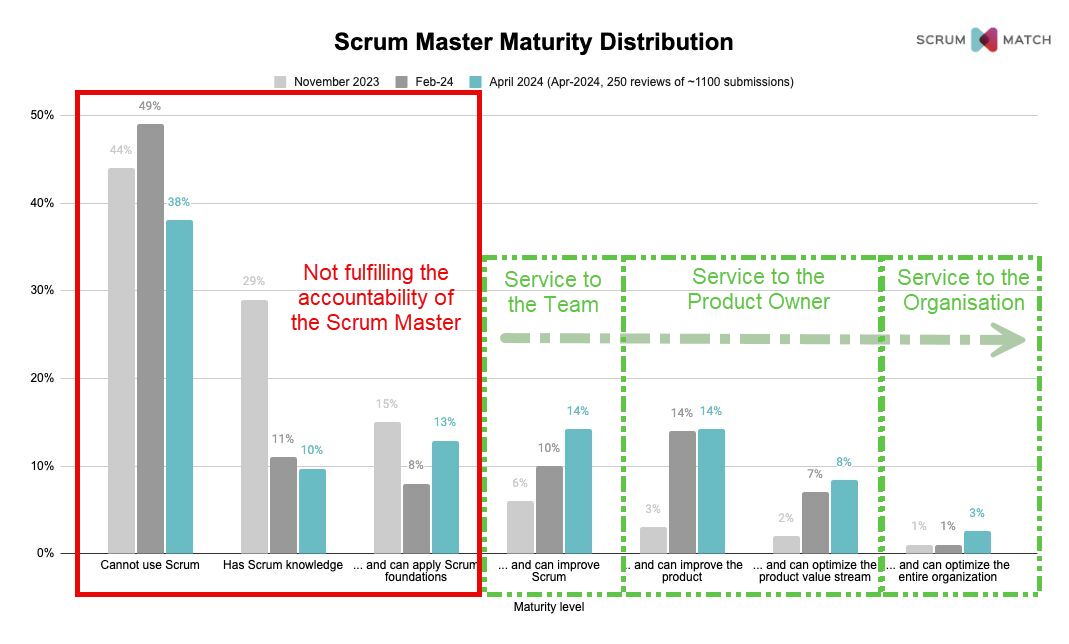
📊 The numbers tell a chilling story:
- ❌ 38% are grossly incompetent: These individuals, despite holding Scrum Master roles, have no understanding of Scrum and likely haven’t even read the Scrum Guide.
- ❌ 10% are also incompetent: They’ve read the Scrum Guide but can’t apply its principles effectively and yet still apply for Scrum Master roles.
- ⚠️ 13% can apply Scrum at a basic level: This is not sufficient for a Scrum Master and should be the minimum expected of any Scrum Team member.
😨 Worse many of the low skilled Scrum Masters assessed had been in the role for a decade or more!
And that’s 61% of Scrum Masters? Alarmingly, some are even celebrating being part of this group, mistakenly believing it makes them a good hire. 🚫 It does not.
✅ This leaves only the top 39% (just over one-third) of Scrum Masters able to fulfil any aspect of the accountability described in the Scrum Guide, with a mere 3% able to fulfil it entirely.
📉 This is why Agile Coaches and Scrum Masters are losing their jobs: In the boom times of the agile economy, these incompetent individuals were overlooked, but now, as times are tougher, the wheat is being separated from the chaff. 🌾
Let’s strive for better standards and ensure our Scrum Masters are truly equipped to lead! 💪 hashtag#ScrumMastery hashtag#AgileLeadership hashtag#ContinuousImprovement
What to read next
Why Most Scrum Masters Are Failing and What They Should Know
Many Scrum Masters lack core Scrum knowledge and technical skills, leading to poor team support. Learn key competencies needed for …
The fastest way to cripple a Scrum Team? Hire the wrong Scrum Master
Hiring an unqualified Scrum Master limits team growth, reduces agility, and hinders value delivery. Effective Scrum Masters drive change, …
Too many Scrum Masters believe they don’t need technical skills
Highlights the importance of technical knowledge for Scrum Masters, arguing that understanding team-specific skills is essential to …
Hiring a Scrum Master is hard
Finding a skilled Scrum Master is challenging; true effectiveness requires deep Scrum knowledge, coaching ability, and alignment with your …
Would you hire a Junior CISO? A Junior Financial Director
Scrum Masters require proven expertise, not entry-level skills. Hiring juniors in this role risks team performance and agile success; …
The Competence Crisis in Scrum Master Roles: A Call for Excellence
Many Scrum Masters lack essential skills and experience, leading to poor agile outcomes. True competence requires deep knowledge, practical …
Detecting agile theatre with real delivery signals
Why Most Companies Operating Models Fail in Dynamic Markets
A concise comparison of Predictive and Adaptive Operating Models, explaining why traditional structures fail in dynamic markets and how …
Don’t Manage Dependencies, Remove Them
Explains why dependencies are a sign of poor system design and outlines steps to eliminate them by aligning teams, clarifying ownership, and …
The Estimation Trap: How Tracking Accuracy Undermines Trust, Flow, and Value in Software Delivery
Tracking estimation accuracy in software delivery leads to mistrust, fear, and distorted behaviours. Focus on customer value, flow, and …
Flow of Value vs Flow of Work – Misnomer or Useful Shorthand?
Compares “flow of value” and “flow of work” in Kanban, explaining why only validated outcomes count as value and stressing the need for …
Why Outsourcing DevOps Fails, and How Real Engineering Excellence Starts With Your Team
Avoid DevOps vendor lock-in, discover how true engineering excellence starts with partnership, not outsourcing. Ready to transform your …
Why Most Companies Operating Models Fail in Dynamic Markets
A concise comparison of Predictive and Adaptive Operating Models, explaining why traditional structures fail in dynamic markets and how …
Getting Started with Objectives & Key Results
Learn how to successfully implement OKRs by aligning clear strategy, fostering transparency, empowering teams, focusing on outcomes, and …
Futureproof Leadership: How CTOs Can Cut Through the Noise and Lead with Clarity, Confidence, and Culture
Struggling with tech change? Discover how clarity, evidence, and culture can futureproof your team, no chasing trends, just smart …
From Burnout to Breakthrough: How CTOs Can Lead with Clarity, Resilience, and Real Innovation
Feeling overwhelmed as a tech leader? Discover how to shift from chaos to clarity and build resilient, future-ready teams, without burning …
Human and AI Agency in Adaptive Systems: Strategy Before Optimisation
Explores the distinct roles of human and AI agency in adaptive systems, emphasising human-led strategy and accountability versus AI-driven …
Stop Chasing Trends: How Real Agility and DevOps Build Resilient, Adaptable Teams
Stop chasing trends, build real agility. Discover how DevOps and agile create resilient teams, smoother delivery, and sustainable …