As a DevOps consultant, Agile consultant, and trainer, I’ve worked with hundreds of companies to improve their software product development. It’s astonishing how many Scrum Masters lack even a basic understanding of Scrum, let alone the expertise required to support the teams they work with.
A significant portion of Scrum Masters (about 61%*) have either never read the Scrum Guide, lack technical proficiency relevant to their teams, or have only a superficial grasp of how to apply Scrum principles.
It’s no wonder many are being laid off.
Frankly, I’m not surprised, and I’d argue that most Scrum Masters are incompetent and should be let go. Unfortunately, some of the 39%* who are competent are also being affected by these layoffs.
Why are we here?
About 15 years ago, as “agile” was gaining widespread attention, the supply of individuals with strong technical, business, and organizational expertise remained relatively limited. Building those skills takes time, and the initial talent pool was small.
Faced with increasing demand for teams and products, companies worldwide struggled to find qualified people. As a result, they pressured recruiters to fill positions quickly. Since there weren’t enough skilled candidates available, companies lowered their standards, filling roles with individuals who had only completed a two-day PSM/CSM certification course.
Thus, the position we found ourselves in pre-pandemic!
The recent challenges to economic stability have led most companies to “tighten their belts,” prompting a closer evaluation of the value they receive for their spending. Agile Coaches and Scrum Masters have largely failed to make a measurable difference, or even to define metrics by which their impact could be assessed. After more than 20 years of agile methodologies, there are still no clear standards or ways to measure the effectiveness of Scrum Masters. Without measurable impact, companies are questioning the need for the expense.
However, many companies that have reduced their number of Scrum Masters are still hiring, just with higher expectations. Now, they demand competence. They want to know exactly how a Scrum Master will contribute to the business’s success and how that impact will be measured.
What should a Scrum Master for a software team know?
The core accountability of a Scrum Master is the effectiveness of the Scrum Team! Can you help them be effective if you don’t understand the practices within that team’s context? Of course not, but what does that look like? What are the practices that you should expect your Scrum Master to understand?
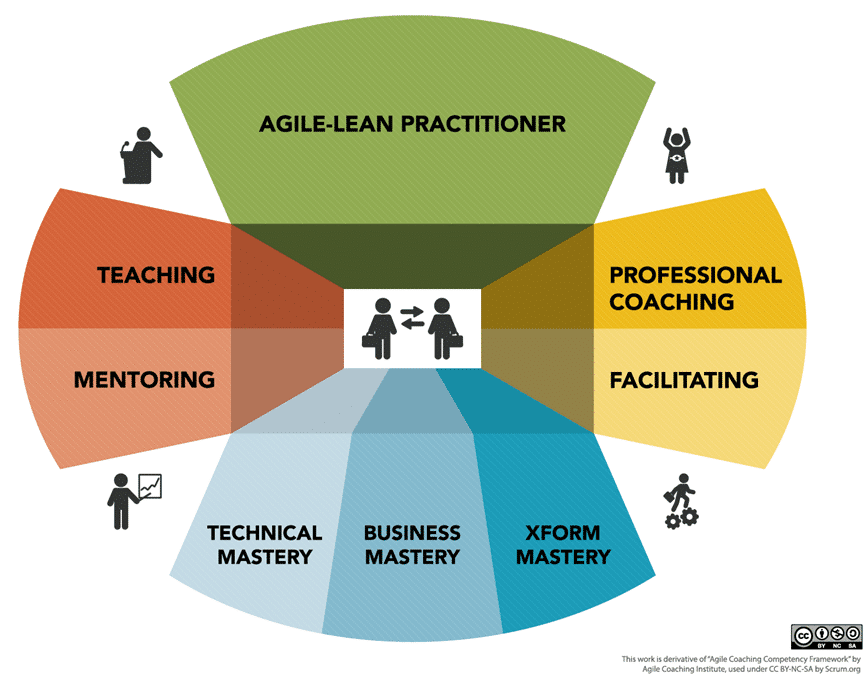
“A Scrum Master is a lean agile practitioner with techical mastery, business mastery, and organsiational evolutionary mastery!” - Lyssa Adkins**
I would expect a Scrum Master for a software team to know:
-
Scrum: its values, underlying principles, and how to apply them effectively. This includes understanding the Scrum framework (roles, events, artefacts) and the purpose behind each element.
-
DevOps: understand the three ways of DevOps, common practices, and how to apply them effectively. This means knowing automation, infrastructure as code (IaC), and continuous feedback loops.
-
Modern Engineering practices: everything from DevOps, plus… CI/CD, SOLID principles, test-first strategies, progressive rollout strategies, feature flags, 1ES (One Engineering System), observability of product. Familiarity with design patterns, refactoring, and coding standards.
-
Agile/lean beyond Scrum: a strong understanding of other Agile/lean philosophies like Kanban, XP (Extreme Programming), and TPS. Know when and how to integrate elements from other frameworks and strategies to complement Scrum.
-
Release Planning: understanding what release planning entails, how to break down product roadmaps, and how to forecast releases while balancing priorities. Be able to facilitate discussions with the Product Owner and Developers about product increment goals.
-
Product Discovery & Validation: understanding what needs to be built and how to make decisions based on limited knowlage. Know and understand evidence-based management and hypothesis-driven engineering practices.
-
Stakeholder Management: understanding how to work with stakeholders, communicate progress, manage expectations, and foster alignment. Know how to teach the team to shield themselves from external pressure while still delivering value.
-
Scaling Agile: Understand frameworks for scaling Agile, such as Descaling, LeSS, or Nexus. Be able to coach teams on how to function effectively within a scaled environment and manage dependencies.
-
Coaching and Facilitation Skills: the ability to coach the team towards self-management, continuous improvement, and collaboration. Skilled in facilitation techniques like liberating structires to be able to facilitate meetings and events.
-
Conflict Management: possess the ability to navigate the grone zone safely leverage managed conflicts within the team and foster a healthy team environment for ideation and discovery. Understand team dynamics and how to encourage constructive feedback and communication.
-
Metrics and Continuous Improvement: familiarity with Agile metrics (e.g., Cycle Time, Work Item Aging, Work In Process, Throughput), and how to use them to enable improvement. Ability to encourage the team to reflect on these metrics and find ways to improve.
While the Scrum Master may not directly perform the tasks mentioned above, they are accountable for ensuring that these tasks are carried out effectively. This involves training and mentoring teams in the necessary practices, and once the teams have a solid understanding, knowing when to shift towards coaching and facilitating the team, their stakeholders, and the broader organization.
When everyone around is incompetent, competence looks like an ideal!
Some have pushed back, saying this list is too idealistic. However, I see it as the starting point for a Scrum Master, not the end goal. While someone is on their journey to becoming a Scrum Master, they should be working within a team and learning. All the foundational knowledge is covered, at least at a beginner level, in courses like APS, APS-SD, PSM, PSPO, and PSK. That’s roughly 90 hours of classroom time, or just over 11 days of learning.
Does that make you an expert in all these areas? No, of course not, that would be unrealistic. But it’s a start. It’s about knowing these processes and practices exist and having the opportunity to try them out within a team.
Theory and Practice….
“Without theory, there is no learning. That is, without theory, there is no way to use the information that comes to us. We need a theory for data. We need a theory for experience. Without theory, we learn nothing.” - W. Edwards Deming***
Reference
-
* Assessment of knowledge based on Scrum Match model and their published data
-
** Coaching Agile Teams: A Companion for ScrumMasters, Agile Coaches, and Project Managers in Transition by Lyssa Adkins
-
*** System of Profound Knowledge by W. Edwards Deming
Smart Classifications
Each classification [Concepts, Categories, & Tags] was assigned using AI-powered semantic analysis and scored across relevance, depth, and alignment. Final decisions? Still human. Always traceable. Hover to see how it applies.
What to read next
The Competence Crisis in Scrum Master Roles: A Call for Excellence
Many Scrum Masters lack essential skills and experience, leading to poor agile outcomes. True competence requires deep knowledge, practical …
There Is No Such Thing as a "Junior" Scrum Master
Argues that the Scrum Master role requires proven mastery and real-world experience, not entry-level skills or certifications, and should be …
Great Scrum Masters Need Technical, Business, and Organisational Mastery
Scrum Masters are most effective when they combine leadership skills with technical, business, and organisational mastery to support teams, …
Where Agile Went Wrong: Understanding the Competence Crisis
Explores how early assumptions about competence led to Agile’s current skills gap, highlighting the need for continuous learning, better …
The Crucial Role of Competence: How Knowledgeable Scrum Masters Drive Team Success
Scrum Masters with deep knowledge and competence enable teams to deliver better products, drive business outcomes, and foster real …
Focusing Beyond "Agile": Building True Capability in Organizations
Explores why building organisational capability, competence, and continuous learning is more effective than focusing solely on Agile roles, …
Detecting agile theatre with real delivery signals
Why Most Companies Operating Models Fail in Dynamic Markets
A concise comparison of Predictive and Adaptive Operating Models, explaining why traditional structures fail in dynamic markets and how …
Don’t Manage Dependencies, Remove Them
Explains why dependencies are a sign of poor system design and outlines steps to eliminate them by aligning teams, clarifying ownership, and …
The Estimation Trap: How Tracking Accuracy Undermines Trust, Flow, and Value in Software Delivery
Tracking estimation accuracy in software delivery leads to mistrust, fear, and distorted behaviours. Focus on customer value, flow, and …
Flow of Value vs Flow of Work – Misnomer or Useful Shorthand?
Compares “flow of value” and “flow of work” in Kanban, explaining why only validated outcomes count as value and stressing the need for …
Why Outsourcing DevOps Fails, and How Real Engineering Excellence Starts With Your Team
Avoid DevOps vendor lock-in, discover how true engineering excellence starts with partnership, not outsourcing. Ready to transform your …
Don’t Manage Dependencies, Remove Them
Explains why dependencies are a sign of poor system design and outlines steps to eliminate them by aligning teams, clarifying ownership, and …
Why Outsourcing DevOps Fails, and How Real Engineering Excellence Starts With Your Team
Avoid DevOps vendor lock-in, discover how true engineering excellence starts with partnership, not outsourcing. Ready to transform your …
Why Big Bang Rewrites Fail: How Sustainable Change and Engineering Excellence Transform Legacy Systems
Ditch the Big Bang rewrite. Discover why sustainable, in-place change drives true engineering excellence and lasting transformation in your …
Is Agile Really Just a Mindset?
Explores Agile as a disciplined system of delivery, emphasizing engineering excellence, CI/CD, observability, and system design over mindset …
Telling People What to Do Is Not Leadership. It’s a Failure of System Design
Explores why real leadership means designing systems that enable team autonomy, flow, and accountability, rather than relying on …
From Legacy Pain to Modern DevOps: My Proven Roadmap for Real Engineering Transformation
Transform legacy engineering with a proven, step-by-step approach, learn how to automate, adapt, and build a resilient, modern DevOps …
Why Most Companies Operating Models Fail in Dynamic Markets
A concise comparison of Predictive and Adaptive Operating Models, explaining why traditional structures fail in dynamic markets and how …
Don’t Manage Dependencies, Remove Them
Explains why dependencies are a sign of poor system design and outlines steps to eliminate them by aligning teams, clarifying ownership, and …
The Estimation Trap: How Tracking Accuracy Undermines Trust, Flow, and Value in Software Delivery
Tracking estimation accuracy in software delivery leads to mistrust, fear, and distorted behaviours. Focus on customer value, flow, and …
Kendall Guide - A System of Work for AI Adoption
Flow of Value vs Flow of Work – Misnomer or Useful Shorthand?
Compares “flow of value” and “flow of work” in Kanban, explaining why only validated outcomes count as value and stressing the need for …
Estimating Better in an Overloaded System Is a Poor Man’s Strategy
High work in progress (WIP) causes delays and unpredictability; improving estimates won’t help. Limiting WIP and focusing on flow is key to …
Detecting agile theatre with real delivery signals
Don’t Manage Dependencies, Remove Them
Explains why dependencies are a sign of poor system design and outlines steps to eliminate them by aligning teams, clarifying ownership, and …
The Estimation Trap: How Tracking Accuracy Undermines Trust, Flow, and Value in Software Delivery
Tracking estimation accuracy in software delivery leads to mistrust, fear, and distorted behaviours. Focus on customer value, flow, and …
Flow of Value vs Flow of Work – Misnomer or Useful Shorthand?
Compares “flow of value” and “flow of work” in Kanban, explaining why only validated outcomes count as value and stressing the need for …
Why Outsourcing DevOps Fails, and How Real Engineering Excellence Starts With Your Team
Avoid DevOps vendor lock-in, discover how true engineering excellence starts with partnership, not outsourcing. Ready to transform your …
Estimating Better in an Overloaded System Is a Poor Man’s Strategy
High work in progress (WIP) causes delays and unpredictability; improving estimates won’t help. Limiting WIP and focusing on flow is key to …