Last month I created an article for NDC Magazine on Scaling Scrum. The guys at NDC must have liked it as they decided to put it on the cover. This article is a discussion and investigation into what it means to be a Professional Scrum Team, why we need it, and how we can scale it.
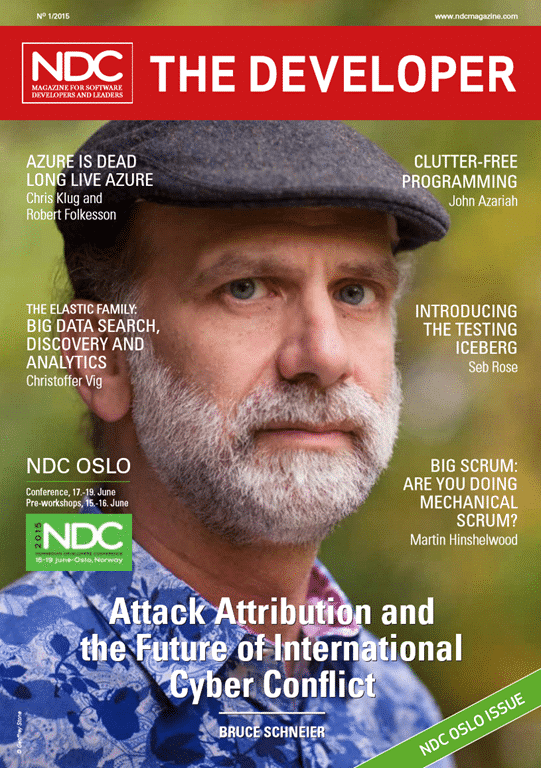
[Download NDC Magazine 2015.1 as a PDF ]
Excerpt from the article
Many organisations move towards Scrum and Agile for the allure of hyper-productivity. This is the promise that led them to Scrum in the first place and they are, more often than not, sorely disappointed when they don’t achieve it. The easiest way to make Scrum as ineffective as possible, is to pay lip service to it. Forgetting about the values, principles, and technical excellence that are the underpinning of its effectiveness.
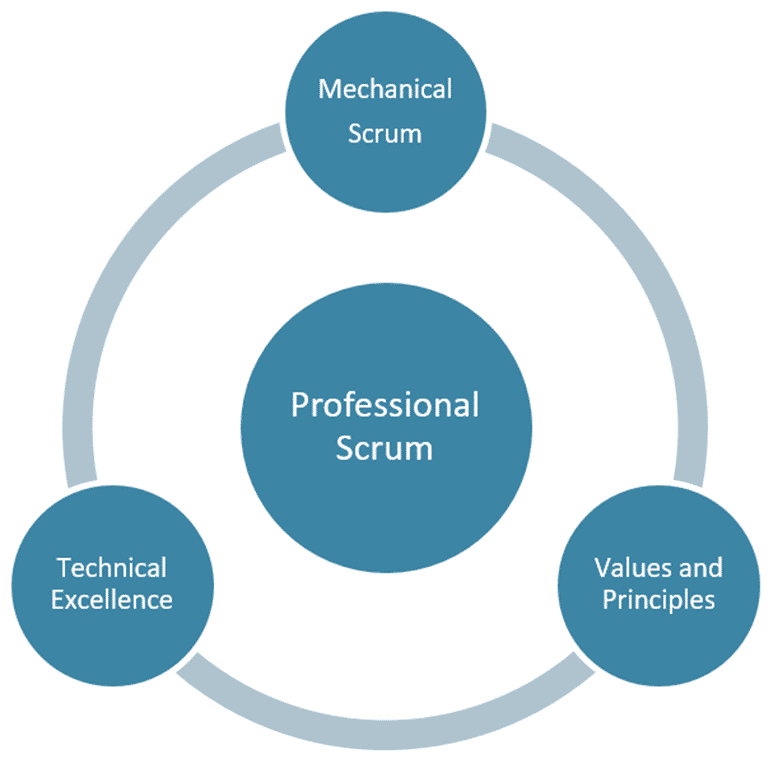
It’s just fine to start with mechanical Scrum and work from there. Just don’t expect to get the effectiveness that you desire without the other two pillars. You need all three of the pillars to be able to ship twice the features in half the time.
The desire: Twice the features in half the time
No really! You can ship twice the features in half the time, but only with Professional Scrum. In Professional Scrum we not only follow the framework, but enact the values and principles. In Professional Scrum we strive for technical excellence and really focus on doing the right thing and minimising technical debt (yes, I know that unhedged fund is technically more accurate.)
Jeff Sutherland talks often of using Scrum to make money as a venture capitalist. His company buys struggling software companies and turning them around. Jeff does this by implementing Professional Scrum and turning that struggling software organisation into a highly tuned, effective team that turns ideas into customer value. He can then sell that company for many time that which he bought it for; professionals are worth far more than cowboys.
It beggars belief that so many organisations only practice flaccid Scrum and waste their investors’ money. That’s bad when it is private investment, but down right criminal in a public company. And let’s not get started with the public sector.
Is your organisation paying lip service to the values and principals? Does it feel more like ‘yeeha’, or a group of professionals?
Mechanical Scrum is only the start [read more… ]
Smart Classifications
Each classification [Concepts, Categories, & Tags] was assigned using AI-powered semantic analysis and scored across relevance, depth, and alignment. Final decisions? Still human. Always traceable. Hover to see how it applies.
What to read next
Unlocking the True Potential of Scrum: Why Professionalism Matters in Agile Teams
Explores how true professionalism in Scrum enables Agile teams to deliver production-ready products, highlighting the importance of …
Big Scrum: All you need and not enough
Explores how to scale Scrum effectively by applying agile values, fostering professional teams, and adapting processes to fit unique …
Mastering the Art of Scaling Scrum: Insights from the Scaled Professional Scrum Course
Learn practical strategies for overcoming common challenges in scaling Scrum, based on hands-on insights from the Scaled Professional Scrum …
Mastering the Art of Scaling Agile: Strategies to Maintain Agility Across Multiple Teams
Learn effective strategies for scaling agile across multiple teams, managing dependencies, avoiding common pitfalls, and maintaining agility …
Why More Teams Won't Speed Up Delivery: The Truth About Scaling Effectively
Adding more teams doesn’t guarantee faster delivery; effective scaling requires reducing dependencies, aligning goals, and minimising …
Are there any Scrum courses that teach you how to scale Scrum?
Learn how to scale Scrum by tailoring frameworks to your organisation, focusing on dependency management, alignment, and iterative …
Detecting agile theatre with real delivery signals
Why Most Companies Operating Models Fail in Dynamic Markets
A concise comparison of Predictive and Adaptive Operating Models, explaining why traditional structures fail in dynamic markets and how …
Don’t Manage Dependencies, Remove Them
Explains why dependencies are a sign of poor system design and outlines steps to eliminate them by aligning teams, clarifying ownership, and …
The Estimation Trap: How Tracking Accuracy Undermines Trust, Flow, and Value in Software Delivery
Tracking estimation accuracy in software delivery leads to mistrust, fear, and distorted behaviours. Focus on customer value, flow, and …
Flow of Value vs Flow of Work – Misnomer or Useful Shorthand?
Compares “flow of value” and “flow of work” in Kanban, explaining why only validated outcomes count as value and stressing the need for …
Why Outsourcing DevOps Fails, and How Real Engineering Excellence Starts With Your Team
Avoid DevOps vendor lock-in, discover how true engineering excellence starts with partnership, not outsourcing. Ready to transform your …
The Definition of Done is a Commitment to Quality
Defines the Definition of Done in Scrum as a clear, shared standard for quality, ensuring increments are releasable, transparent, and …
Why Your Definition of “Done” Is Holding Back Quality, Agility, and Trust, And How to Raise the Bar
Is your team’s “done” really done? Discover how a clear, objective definition of done boosts quality, agility, and trust in product …
Acceptance Criteria vs Definition of Done: Why Getting This Right Builds Trust and Delivers Quality Faster
Stop confusing acceptance criteria with definition of done, learn the crucial difference to boost quality, speed, and trust in your agile …
How to Evolve Your Definition of Done: Start Small, Grow Smarter, and Build Lasting Momentum
Unlock a smarter Definition of Done, start small, evolve standards, and build team momentum without overwhelm. Discover how progress drives …
Why Most Transformations Fail Without Honest Conversations
Most transformations fail without open, honest conversations that address real issues, making transparency and tough dialogue essential for …
Why Your Definition of Done Is the Secret Weapon for Real Business Impact and Agile Growth
Transform your definition of done into a strategic advantage, deliver real value, reduce risk, and drive business impact with every sprint.
Why Most Companies Operating Models Fail in Dynamic Markets
A concise comparison of Predictive and Adaptive Operating Models, explaining why traditional structures fail in dynamic markets and how …
Don’t Manage Dependencies, Remove Them
Explains why dependencies are a sign of poor system design and outlines steps to eliminate them by aligning teams, clarifying ownership, and …
The Estimation Trap: How Tracking Accuracy Undermines Trust, Flow, and Value in Software Delivery
Tracking estimation accuracy in software delivery leads to mistrust, fear, and distorted behaviours. Focus on customer value, flow, and …
Kendall Guide - A System of Work for AI Adoption
Flow of Value vs Flow of Work – Misnomer or Useful Shorthand?
Compares “flow of value” and “flow of work” in Kanban, explaining why only validated outcomes count as value and stressing the need for …
Estimating Better in an Overloaded System Is a Poor Man’s Strategy
High work in progress (WIP) causes delays and unpredictability; improving estimates won’t help. Limiting WIP and focusing on flow is key to …