I have been an accredited Evidence-based Management Expert with Scrum.org for the last 7 years and I have been using the Evidence-based Management Guide to encourage leaders to make decisions based on evidence instead of gut feel.
For lots of reasons that program had been taking a back burner with Scrum.org over the years. The main reason is that there is a lot of thought and practical evaluation that needs to be done to validate the ideas contained within the guide. My fellow EBM Experts and I have been evaluating it with customers big and small, from defence to police services , and media to healthcare , we have run the numbers, crunched the data and integrated the feedback. It’s time to announce the latest course in the Agile Leadership series! A one-day event, the Professional Agile Leadership with Evidence-Based Management Training with Certification (PAL-EBM).
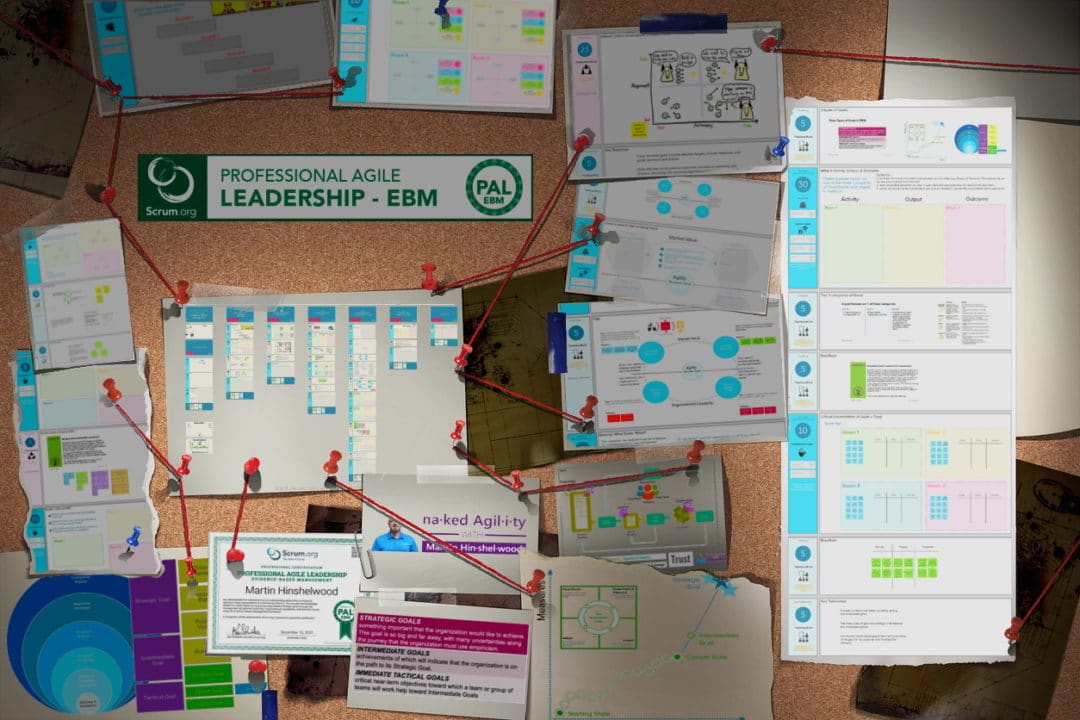
A couple of weeks ago I attended one of the first events as well as an additional trainer preparation event Scrum.org calls a Virtual Train the Trainer (vTTT). I have to say that I loved participating in this class.
One of the key value propositions is that this call is not there to give you metrics that you must use. Instead, we encourage businesses to create their own metrics based on your unique context! You need to have metrics but we are not arrogant enough to assume that we have the right ones for you.
Why do we need a [types field=‘code’ item=‘46220’][/types]?
You would think that we would not have to say to folks that having a Vision and Strategic Goal is a necessity for success, but we do. That Vision and Strategic Goal need to be communicated to everyone that is working on your Product or within your business. Successful organisations do a better job than unsuccessful ones at connecting their employees to that Vision and Goal, at helping them understand how the work they do every day contributes to that vision and goal.
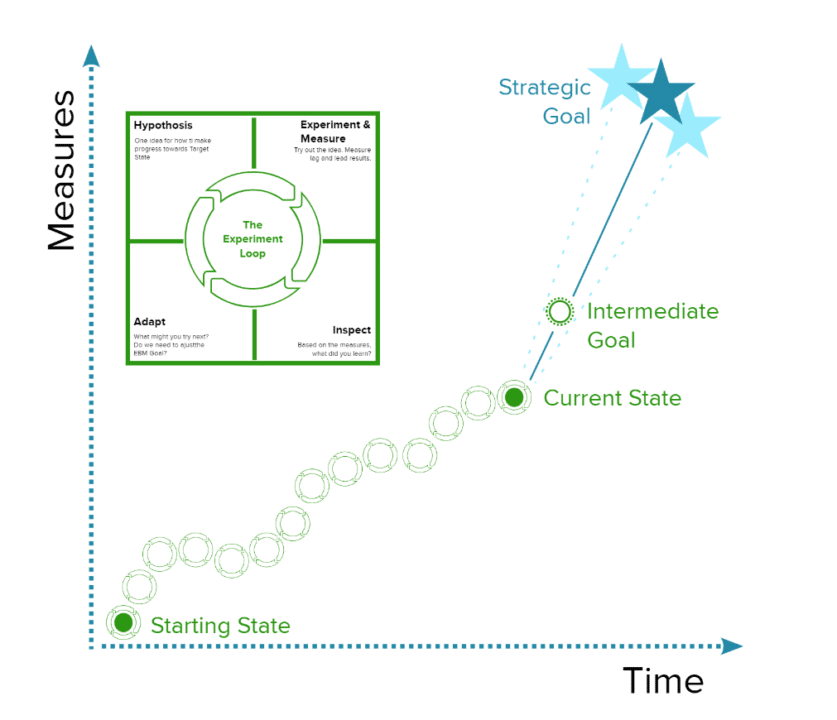
Time and again I and my colleagues visit companies that either doesn’t have a vision or have one that is not communicated. Even when there is one, and it is communicated the ability for people doing the work to connect to that vision is in question.
How well do the people doing the work in your company connect with your vision and goal for your product or business?
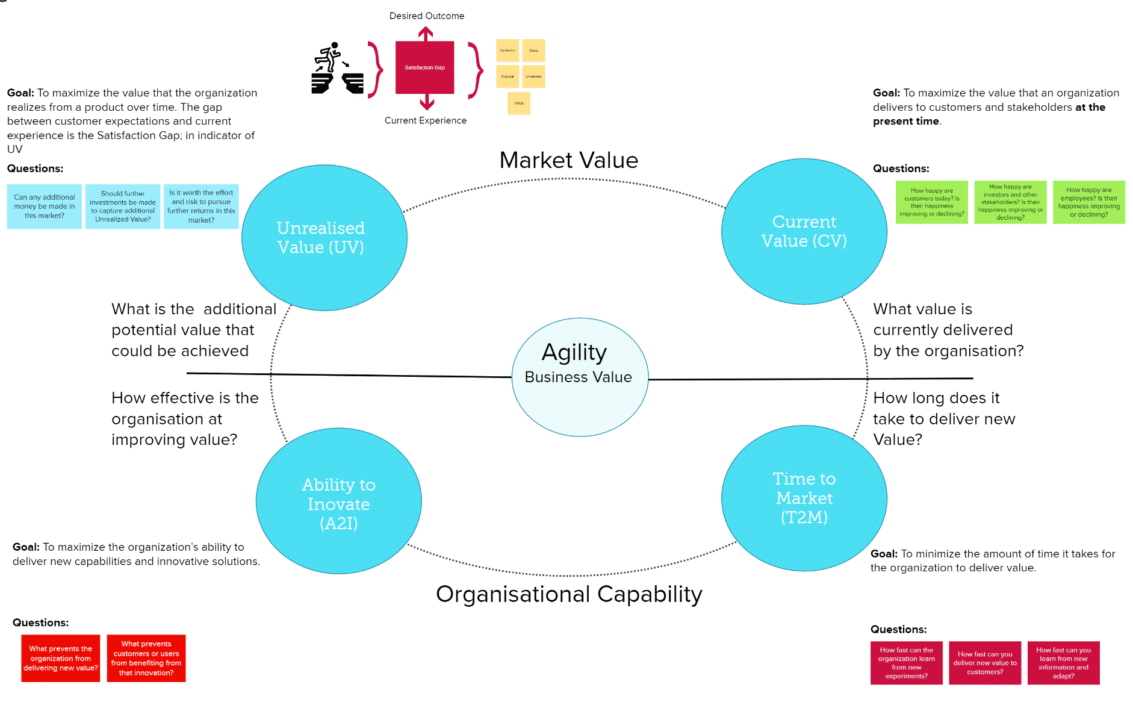
Just as the PAL gets you to think about how you lead an organisation, the PAL-EBM gets you to think about how you measure your success!
Overview of the [types field=‘code’ item=‘46220’][/types]
[wpv-post-body view_template=“None” suppress_filters=“true” item=“46220”]
Who is the [types field=‘code’ item=‘46220’][/types] for?
[types field=‘cource-target-audience’ suppress_filters=‘true’ item=‘46220’][/types]
What will you learn in the [types field=‘code’ item=‘46220’][/types]?
[types field=‘course-objectives’ suppress_filters=‘true’ item=‘46220’][/types]
Additional Content
[wpv-view name=“2021-blogpostsbytag” limit=“10” wpvposttag=“Evidence-Based Management”]
Our upcomming classes!
[wpv-view name=“2021-coursescheduleforposts”]
Smart Classifications
Each classification [Concepts, Categories, & Tags] was assigned using AI-powered semantic analysis and scored across relevance, depth, and alignment. Final decisions? Still human. Always traceable. Hover to see how it applies.
What to read next
The Power of Metrics: Why PAL-EBM is Essential for Your Organization
Learn how evidence-based metrics drive organisational success, avoid negative behaviours, and enable transparent, data-driven decisions for …
Mastering Evidence-Based Management (EBM) for Product Owners: Maximizing Value Delivery
Learn how product owners use Evidence-Based Management (EBM) to make data-driven decisions, track key value metrics, and maximise product …
Transform Your Leadership: The Power of Evidence-Based Management in Agile
Discover how evidence-based management empowers Agile leaders to make data-driven decisions, foster continuous improvement, and boost team …
Unlocking Business Value: The Power of Evidence-Based Management for Effective Leadership
Explains how evidence-based management uses data-driven decisions and tailored metrics to boost business value, leadership effectiveness, …
What my father taught me about Evidence-based Management (34 years before it was invented!)
Explores how evidence-based management uses data-driven practices to improve organisational agility, value delivery, and decision-making in …
Agile Leadership: Empowering Managers with the Right Skills
Explores how agile leadership and evidence-based management training help managers develop servant leadership skills, delegate effectively, …
Detecting agile theatre with real delivery signals
Why Most Companies Operating Models Fail in Dynamic Markets
A concise comparison of Predictive and Adaptive Operating Models, explaining why traditional structures fail in dynamic markets and how …
Don’t Manage Dependencies, Remove Them
Explains why dependencies are a sign of poor system design and outlines steps to eliminate them by aligning teams, clarifying ownership, and …
The Estimation Trap: How Tracking Accuracy Undermines Trust, Flow, and Value in Software Delivery
Tracking estimation accuracy in software delivery leads to mistrust, fear, and distorted behaviours. Focus on customer value, flow, and …
Flow of Value vs Flow of Work – Misnomer or Useful Shorthand?
Compares “flow of value” and “flow of work” in Kanban, explaining why only validated outcomes count as value and stressing the need for …
Why Outsourcing DevOps Fails, and How Real Engineering Excellence Starts With Your Team
Avoid DevOps vendor lock-in, discover how true engineering excellence starts with partnership, not outsourcing. Ready to transform your …
Why Most Companies Operating Models Fail in Dynamic Markets
A concise comparison of Predictive and Adaptive Operating Models, explaining why traditional structures fail in dynamic markets and how …
Getting Started with Objectives & Key Results
Learn how to successfully implement OKRs by aligning clear strategy, fostering transparency, empowering teams, focusing on outcomes, and …
Futureproof Leadership: How CTOs Can Cut Through the Noise and Lead with Clarity, Confidence, and Culture
Struggling with tech change? Discover how clarity, evidence, and culture can futureproof your team, no chasing trends, just smart …
From Burnout to Breakthrough: How CTOs Can Lead with Clarity, Resilience, and Real Innovation
Feeling overwhelmed as a tech leader? Discover how to shift from chaos to clarity and build resilient, future-ready teams, without burning …
Human and AI Agency in Adaptive Systems: Strategy Before Optimisation
Explores the distinct roles of human and AI agency in adaptive systems, emphasising human-led strategy and accountability versus AI-driven …
Stop Chasing Trends: How Real Agility and DevOps Build Resilient, Adaptable Teams
Stop chasing trends, build real agility. Discover how DevOps and agile create resilient teams, smoother delivery, and sustainable …
Why Most Companies Operating Models Fail in Dynamic Markets
A concise comparison of Predictive and Adaptive Operating Models, explaining why traditional structures fail in dynamic markets and how …
The Estimation Trap: How Tracking Accuracy Undermines Trust, Flow, and Value in Software Delivery
Tracking estimation accuracy in software delivery leads to mistrust, fear, and distorted behaviours. Focus on customer value, flow, and …
Getting Started with Objectives & Key Results
Learn how to successfully implement OKRs by aligning clear strategy, fostering transparency, empowering teams, focusing on outcomes, and …
OKR Guide - A Social Discipline for Shared Focus, Measurable Contribution, and Strategic Learning
A certification proves you’ve passed a test
Certifications show test-passing ability but don’t prove real-world product skills. Experience, judgement, and stakeholder influence matter …
Most companies still get Product Ownership wrong
Many organisations misunderstand Product Ownership, treating it as simple backlog management instead of a strategic, accountable role …
The Definition of Done is a Commitment to Quality
Defines the Definition of Done in Scrum as a clear, shared standard for quality, ensuring increments are releasable, transparent, and …
Why Your Definition of “Done” Is Holding Back Quality, Agility, and Trust, And How to Raise the Bar
Is your team’s “done” really done? Discover how a clear, objective definition of done boosts quality, agility, and trust in product …
Acceptance Criteria vs Definition of Done: Why Getting This Right Builds Trust and Delivers Quality Faster
Stop confusing acceptance criteria with definition of done, learn the crucial difference to boost quality, speed, and trust in your agile …
How to Evolve Your Definition of Done: Start Small, Grow Smarter, and Build Lasting Momentum
Unlock a smarter Definition of Done, start small, evolve standards, and build team momentum without overwhelm. Discover how progress drives …
Why Most Transformations Fail Without Honest Conversations
Most transformations fail without open, honest conversations that address real issues, making transparency and tough dialogue essential for …
Why Your Definition of Done Is the Secret Weapon for Real Business Impact and Agile Growth
Transform your definition of done into a strategic advantage, deliver real value, reduce risk, and drive business impact with every sprint.