In the The Evidence-Based Management Guide we talk about the Intermediate Strategic Goal and I likened that to the Product Goal in the 2020 Scrum Guide . If we also think of each Sprint as a tactical move towards fulfilling that Product Goal then the Sprint Goal becomes an Intermediate Tactical Goal that moves us towards our current Intermediate Strategic Goal.
Sprint Goal is an Immediate Tactical Goal
The Sprint Goal is a Commitment for the Sprint Backlog and should never be “complete those 10 things” but instead should to describe the Why of the Sprint.
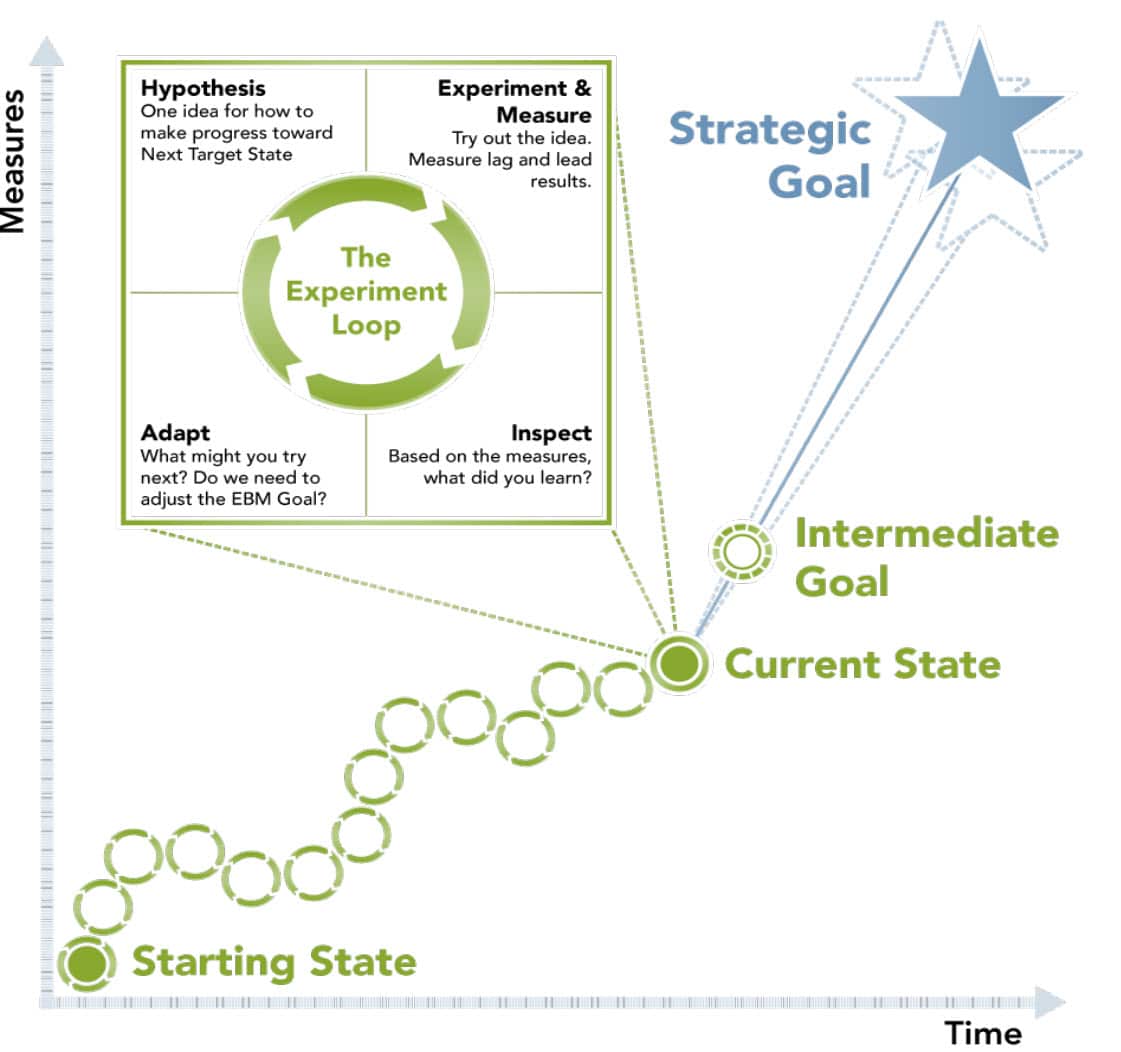
Just as the Product Goal provides the current Strategic direction so the Sprint Goal is the smaller step, the implementation step towards it. The Product Owner is accountable for maximizing the value delivered and should be thinking hard, with the help of the Developers, on what the next tactical outcome they want to try and achieve is.
This Sprint Goal should be high level and I would recommend that using a Lean Canvas to help identify not only the business objective but the behaviour that the Product Owner is trying to create in users or other systems. While I favour the Lean UX Canvas, which we teach in the Professional Scrum with UX , there are many valid options out there to use as a complementary practice in this space.
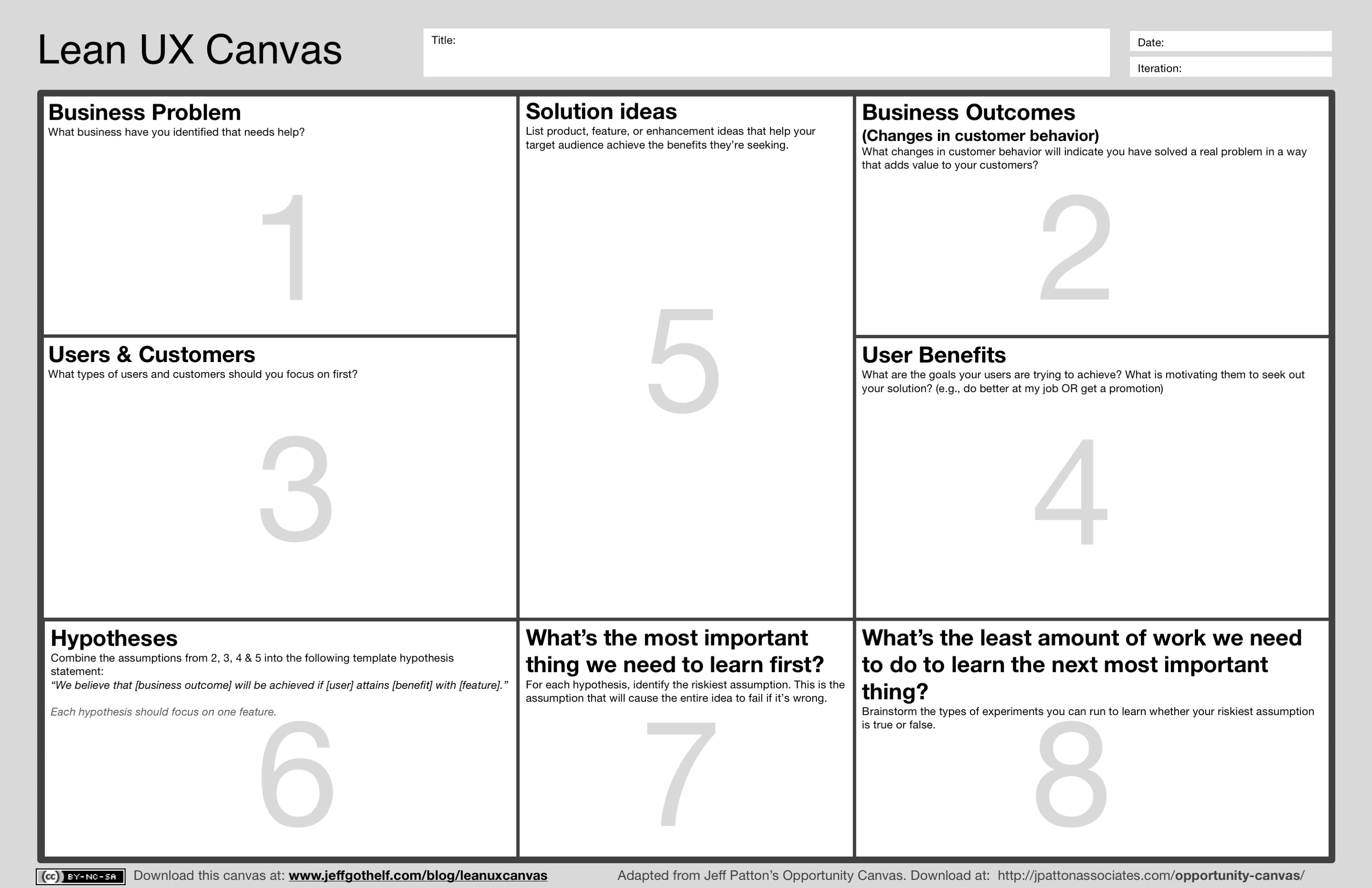
Lean UX Canvas
At a minimum, I would expect a Product Owner to have a hypothesis. A hypothesis is like an assumption, but also with a measure/metric that tells you if you have validated that assumption.
Product Owners are accountable for maximising value and should be looking to not just build features that customers need now, but predict or drive which features that they need now.
A good Product Owner will build features now that your customers need now.
We should always be working to engage with our users; users don’t engage when you build a feature that they will need in 6 months. Instead, we should focus on what will solve an immediate business problem for our users. This will engage them in the process and elicit much more excellent feedback from them.
A great Product Owner will anticipate the features that customers need now.
The trick for any Product Owner is to figure out where the market is going and build features that drive it, rather than just following it. Having a vision and entrepreneurially iterating towards that vision empirically with many small hypotheses is key to unlocking this level up of Product Ownership.
Smart Classifications
Each classification [Concepts, Categories, & Tags] was assigned using AI-powered semantic analysis and scored across relevance, depth, and alignment. Final decisions? Still human. Always traceable. Hover to see how it applies.
What to read next
The Sprint Goal is a commitment for the Sprint Backlog
Explains how the Sprint Goal guides Scrum teams by providing a clear, shared objective for each Sprint, ensuring focus, transparency, and …
What is the most common mistake in sprint planning?
Explains the sprint goal in Scrum as a clear, tactical objective for each sprint, guiding team focus, enabling actionable feedback, and …
What is a product goal?
Explains the sprint goal in Scrum as a clear, tactical objective for each sprint, guiding team focus, enabling actionable feedback, and …
What is a sprint goal?
Explains the sprint goal in Scrum as a clear, tactical objective for each sprint, guiding team focus, enabling actionable feedback, and …
The Product Goal is a commitment for the Product Backlog
Defines the Product Goal as a clear, measurable objective in the Product Backlog that guides Scrum Teams, ensuring focus, transparency, and …
How to Set and Achieve Effective Sprint Goals
Learn how to define, craft, and achieve effective Sprint Goals in Scrum, using frameworks like SMART and OKR to align teams, deliver value, …
Detecting agile theatre with real delivery signals
Why Most Companies Operating Models Fail in Dynamic Markets
A concise comparison of Predictive and Adaptive Operating Models, explaining why traditional structures fail in dynamic markets and how …
Don’t Manage Dependencies, Remove Them
Explains why dependencies are a sign of poor system design and outlines steps to eliminate them by aligning teams, clarifying ownership, and …
The Estimation Trap: How Tracking Accuracy Undermines Trust, Flow, and Value in Software Delivery
Tracking estimation accuracy in software delivery leads to mistrust, fear, and distorted behaviours. Focus on customer value, flow, and …
Flow of Value vs Flow of Work – Misnomer or Useful Shorthand?
Compares “flow of value” and “flow of work” in Kanban, explaining why only validated outcomes count as value and stressing the need for …
Why Outsourcing DevOps Fails, and How Real Engineering Excellence Starts With Your Team
Avoid DevOps vendor lock-in, discover how true engineering excellence starts with partnership, not outsourcing. Ready to transform your …
Why Most Companies Operating Models Fail in Dynamic Markets
A concise comparison of Predictive and Adaptive Operating Models, explaining why traditional structures fail in dynamic markets and how …
The Estimation Trap: How Tracking Accuracy Undermines Trust, Flow, and Value in Software Delivery
Tracking estimation accuracy in software delivery leads to mistrust, fear, and distorted behaviours. Focus on customer value, flow, and …
Getting Started with Objectives & Key Results
Learn how to successfully implement OKRs by aligning clear strategy, fostering transparency, empowering teams, focusing on outcomes, and …
OKR Guide - A Social Discipline for Shared Focus, Measurable Contribution, and Strategic Learning
A certification proves you’ve passed a test
Certifications show test-passing ability but don’t prove real-world product skills. Experience, judgement, and stakeholder influence matter …
Most companies still get Product Ownership wrong
Many organisations misunderstand Product Ownership, treating it as simple backlog management instead of a strategic, accountable role …
Why Most Companies Operating Models Fail in Dynamic Markets
A concise comparison of Predictive and Adaptive Operating Models, explaining why traditional structures fail in dynamic markets and how …
Don’t Manage Dependencies, Remove Them
Explains why dependencies are a sign of poor system design and outlines steps to eliminate them by aligning teams, clarifying ownership, and …
The Estimation Trap: How Tracking Accuracy Undermines Trust, Flow, and Value in Software Delivery
Tracking estimation accuracy in software delivery leads to mistrust, fear, and distorted behaviours. Focus on customer value, flow, and …
Kendall Guide - A System of Work for AI Adoption
Flow of Value vs Flow of Work – Misnomer or Useful Shorthand?
Compares “flow of value” and “flow of work” in Kanban, explaining why only validated outcomes count as value and stressing the need for …
Estimating Better in an Overloaded System Is a Poor Man’s Strategy
High work in progress (WIP) causes delays and unpredictability; improving estimates won’t help. Limiting WIP and focusing on flow is key to …
The Definition of Done is a Commitment to Quality
Defines the Definition of Done in Scrum as a clear, shared standard for quality, ensuring increments are releasable, transparent, and …
Why Your Definition of “Done” Is Holding Back Quality, Agility, and Trust, And How to Raise the Bar
Is your team’s “done” really done? Discover how a clear, objective definition of done boosts quality, agility, and trust in product …
Acceptance Criteria vs Definition of Done: Why Getting This Right Builds Trust and Delivers Quality Faster
Stop confusing acceptance criteria with definition of done, learn the crucial difference to boost quality, speed, and trust in your agile …
How to Evolve Your Definition of Done: Start Small, Grow Smarter, and Build Lasting Momentum
Unlock a smarter Definition of Done, start small, evolve standards, and build team momentum without overwhelm. Discover how progress drives …
Why Most Transformations Fail Without Honest Conversations
Most transformations fail without open, honest conversations that address real issues, making transparency and tough dialogue essential for …
Why Your Definition of Done Is the Secret Weapon for Real Business Impact and Agile Growth
Transform your definition of done into a strategic advantage, deliver real value, reduce risk, and drive business impact with every sprint.