As my first engagement as naked ALM Consulting in the UK I got to work with the fantastic team at DFDS Seaways and teach the Professional Scrum course from Scrum.org.
DFDS Seaways is an organisation that runs ports across Europe and for the PSF training we had folks traveling in from Norway, Sweden and Denmark. We had about 4 physical teams represented, some of which were distributed, and having them all in the one place was unusual.
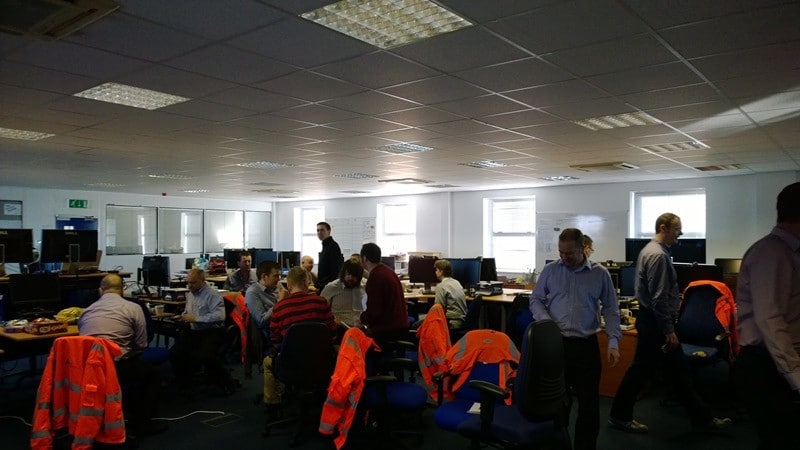
Figure: DFDS Seaways teams getting organised
If you work in American you will notice that there are no cubes in the office. In Europe cubes are fairly rare, to the point I have not encountered them, and most organisation have desks organised in little pods of four or so people. As you can imagine this is a little more cognisant of collocated teams, but I did mention that these guys were distributed.
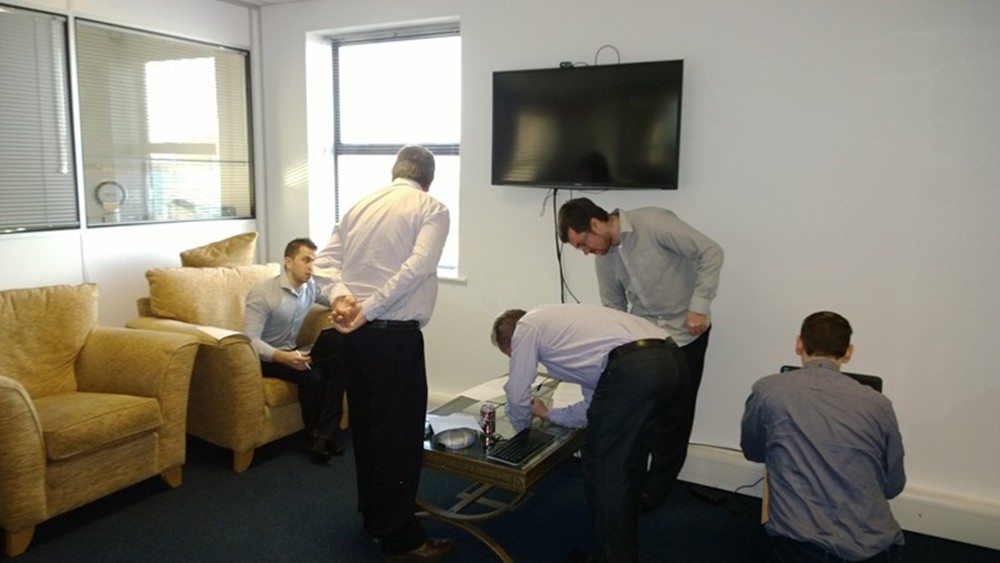
Figure: Tasmanian devil
If you plan of having your teams participate in team based Scrum training like the Professional Scrum course from Scrum.org then you should consider getting everyone together for one large course (30 max.) This allows all of your teams, or as many as you can get into a room to get value from interacting with each other and cross skilling.
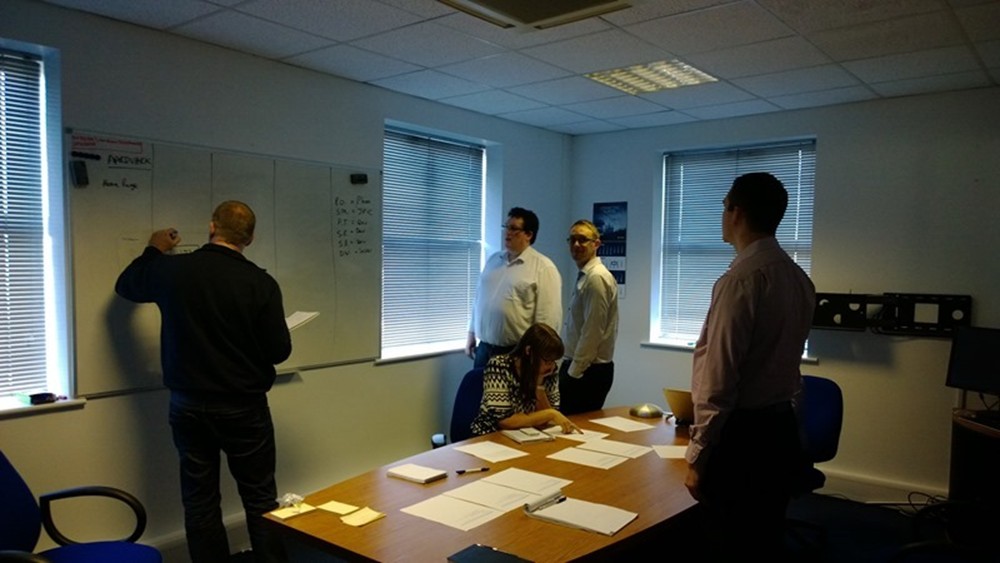
Figure: Aardvark team working together
With so many usually distributed folks from so many teams I asked them to ‘self-organise’ into teams of 5-6 with instructions to try and find folks that they did not know and had not worked with before. Here we have Brits and Sweed’s working together to understand the backlog…
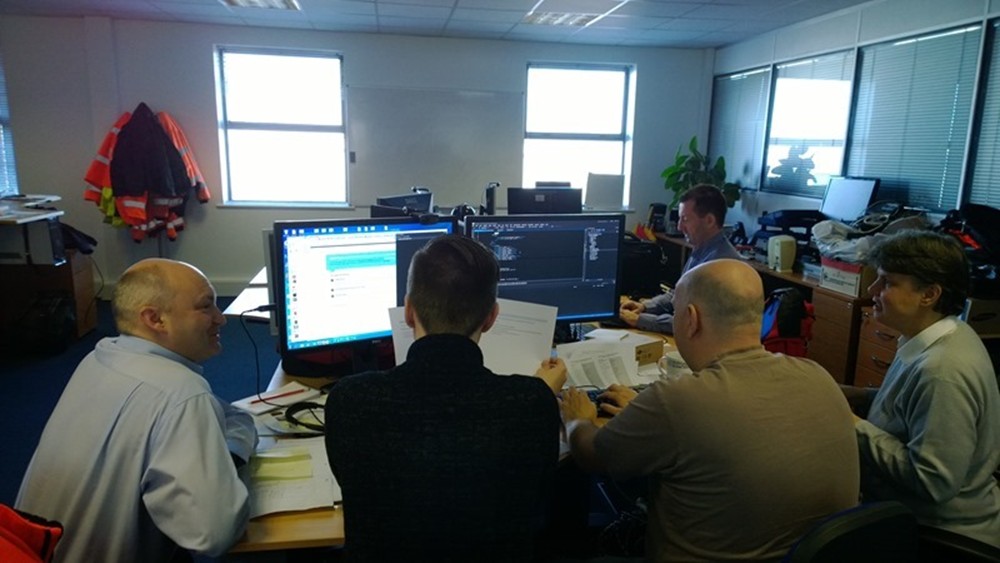
Figure: Team Badger figuring out the requirements
One of the huge advantages to co-located teams is that they can work together, and in high-performing teams ‘swarm’ to solve problems. The Badger team was a good example of that with representatives of two teams from Norway, Netherlands and Britain. Even better, they had representatives from the business who were not in any way technical. Effectively folks that were product owners and stakeholders. There is a lot of value for these types of folks to attend as both sides of the fence learn something.
The Development Team learns how to work with the business and starts to understand, thorough conversation and questions from the business, what is actually important to them.
The Stakeholders and Product Owners learn how valuable their interactions with the Development Team are and start to get an idea of the amount of information that they need to provide to be successful.
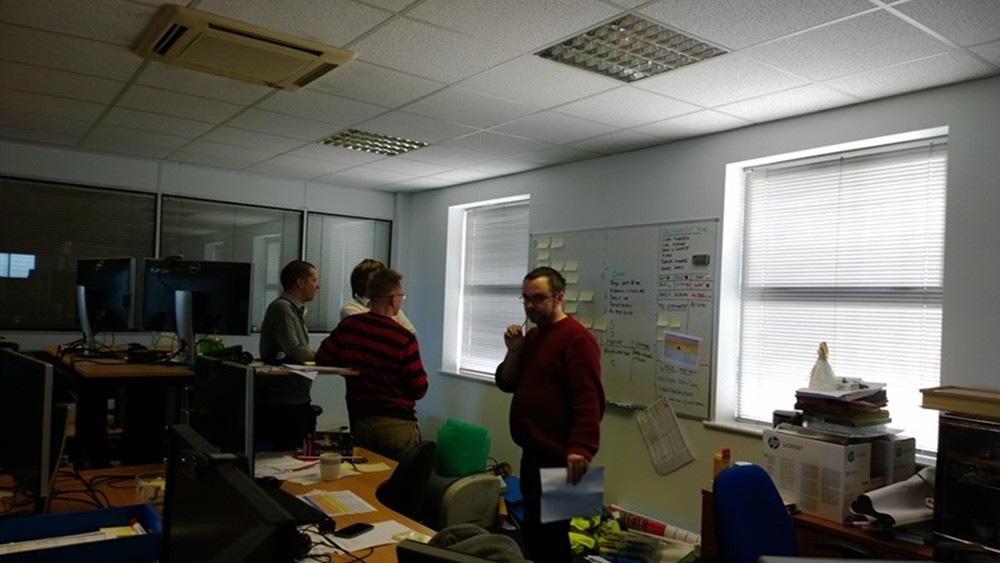
Figure: Team Squirrel looking for direction
The guys at DFDS have been doing Scrum for over 9 months, however this was their first formal training. It was interesting to see which teams picked up the practices more quickly. Indeed the fact that we had 5 teams all working independently on the same work helped those that thought some of the practices, like daily Scrum’s, visual boards, and retrospectives provided value. By the end of the first day there was significant improvement in the teams understanding of the framework, and more importantly their ability to orchestrate the delivery of value in a short period of time.
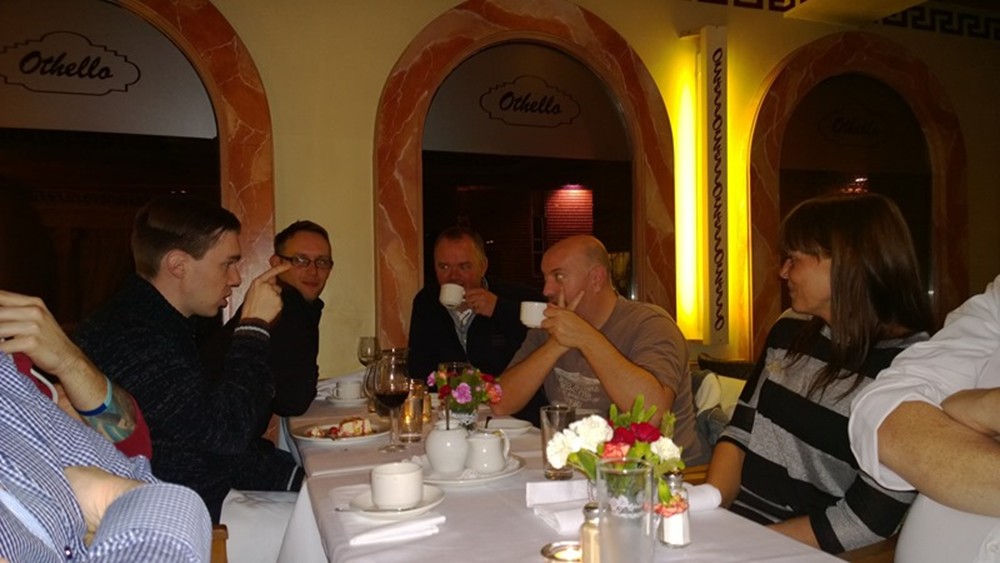
Figure: Greek dinner with the multi-national group
After a long two days training and interacting the entire group got together for a well-earned meal and interaction. The software teams at DFDS were some of the most capable that I have worked with and their camaraderie was intense. I got a lot of value in training them and it was very refreshing to teach Europeans rather than Americans. There are many cultural differences with language being just one…
I really enjoyed my time with DFDS and hopefully they enjoyed the course as well.
Smart Classifications
Each classification [Concepts, Categories, & Tags] was assigned using AI-powered semantic analysis and scored across relevance, depth, and alignment. Final decisions? Still human. Always traceable. Hover to see how it applies.
What to read next
Professional Scrum Courses for 2016 in Oslo, Norway
Details 2016 Professional Scrum Master and Developer courses in Oslo and Kongsberg, covering advanced Scrum, coaching, DevOps, and Agile …
Professional Scrum Foundations in Salt Lake City, Utah
Covers hands-on experiences teaching the Professional Scrum Foundations course in Salt Lake City, highlighting teamwork, agile practices, …
My journey into Professional Scrum
Reflects on experiences with Professional Scrum, highlighting its impact on software development, team culture, training, and the challenges …
What is the most valuable thing you have learned through training people?
Training people worldwide reveals that organisations face similar challenges when adopting agile and scrum, highlighting the universal …
Professional Scrum Foundations in Alameda, California
Covers a two-day, hands-on Scrum.org course in Alameda, teaching Scrum principles, teamwork, and practical software delivery for all roles …
Professional Scrum Developer (.NET) Training in London
Intensive five-day course for software developers covering Scrum, Visual Studio 2010, .NET, and Agile practices through hands-on team …
Detecting agile theatre with real delivery signals
Why Most Companies Operating Models Fail in Dynamic Markets
A concise comparison of Predictive and Adaptive Operating Models, explaining why traditional structures fail in dynamic markets and how …
Don’t Manage Dependencies, Remove Them
Explains why dependencies are a sign of poor system design and outlines steps to eliminate them by aligning teams, clarifying ownership, and …
The Estimation Trap: How Tracking Accuracy Undermines Trust, Flow, and Value in Software Delivery
Tracking estimation accuracy in software delivery leads to mistrust, fear, and distorted behaviours. Focus on customer value, flow, and …
Flow of Value vs Flow of Work – Misnomer or Useful Shorthand?
Compares “flow of value” and “flow of work” in Kanban, explaining why only validated outcomes count as value and stressing the need for …
Why Outsourcing DevOps Fails, and How Real Engineering Excellence Starts With Your Team
Avoid DevOps vendor lock-in, discover how true engineering excellence starts with partnership, not outsourcing. Ready to transform your …
The Definition of Done is a Commitment to Quality
Defines the Definition of Done in Scrum as a clear, shared standard for quality, ensuring increments are releasable, transparent, and …
Why Your Definition of “Done” Is Holding Back Quality, Agility, and Trust, And How to Raise the Bar
Is your team’s “done” really done? Discover how a clear, objective definition of done boosts quality, agility, and trust in product …
Acceptance Criteria vs Definition of Done: Why Getting This Right Builds Trust and Delivers Quality Faster
Stop confusing acceptance criteria with definition of done, learn the crucial difference to boost quality, speed, and trust in your agile …
How to Evolve Your Definition of Done: Start Small, Grow Smarter, and Build Lasting Momentum
Unlock a smarter Definition of Done, start small, evolve standards, and build team momentum without overwhelm. Discover how progress drives …
Why Most Transformations Fail Without Honest Conversations
Most transformations fail without open, honest conversations that address real issues, making transparency and tough dialogue essential for …
Why Your Definition of Done Is the Secret Weapon for Real Business Impact and Agile Growth
Transform your definition of done into a strategic advantage, deliver real value, reduce risk, and drive business impact with every sprint.