The Boards in Azure DevOps are a powerful tool that your teams can leverage to enable transparent visualization of the current state of value delivery.
However, the inclusion of Blocked columns can stealthily erode the very foundations of efficiency these boards are meant to uphold. By obfuscating the state of work-in-progress and breeding a culture of hands-off responsibility, Blocked columns can become the silent saboteurs in your workflow.
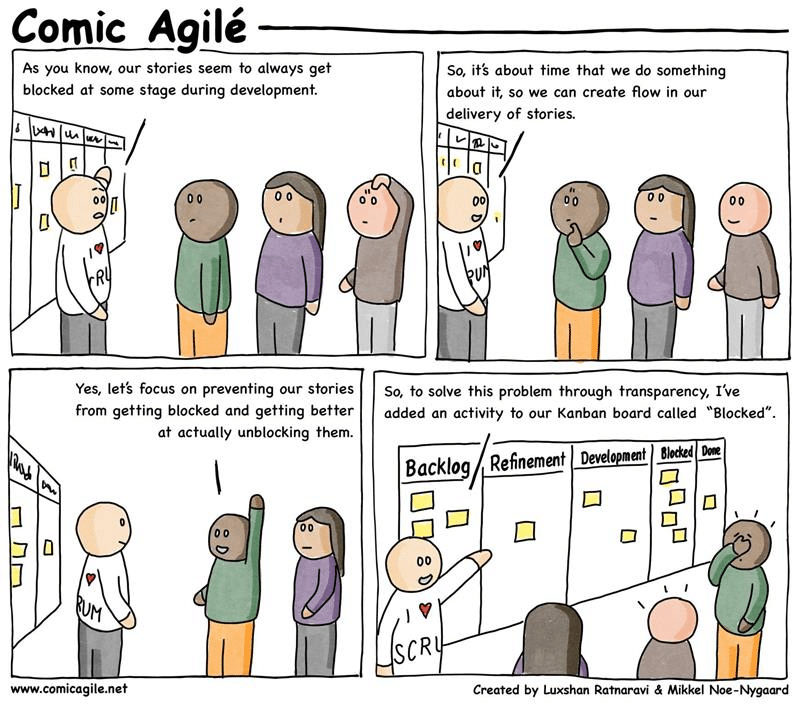
Blocked Columns on Kanban Boards Obfuscate Workflow and Undermine Effectiveness:
Kanban boards serve as the visual representation of the crucial steps involved in knowledge discovery. However, labeling a column as “Blocked” does not align with the essence of this visualization.
“The nature of a column is that it represents a state an item will flow through. Introducing a Blocked Column would imply that the normal flow of work would involve the vast majority of items to be Blocked before they get done”
When tasks are relegated to the Blocked column, there is an alarming tendency for team members to disengage from those tasks, erroneously expecting the issues to be resolved by some external force. This mindset breeds several detrimental consequences:
-
Stagnation of Work Items: Tasks lodged in the Blocked column tend to remain there indefinitely. As time goes by, these work items become stale and outdated.
-
Inflation of WIP Limits: As the Blocked column accumulates more tasks, teams are often tempted to increase their Work In Progress (WIP) limits for the Blocked column. This is a red flag indicating that the team perceives the issue as someone else’s responsibility.
-
Loss of Contextual Information: When a task is tagged as Blocked, it is essential to understand which stage of the process it is obstructed in, as this guides the necessary action for resolution. By lumping tasks into a generic Blocked column, this critical information is lost.
-
Loss of Priority Information: Tasks are typically selected based on their value. However, once a task is shifted to the Blocked column, it is stripped of its priority status, which is vital for efficient workflow management.
-
Back-and-Forth Movement: Transferring a task to the Blocked column necessitates moving it back to its original state once the block is cleared. This back-and-forth movement is not only cumbersome but also increases the likelihood of errors and mismanagement.
It’s imperative to recognize that ‘Blocked’ is distinct from ‘Waiting’. They are not interchangeable. Especially in workflows that involve approval, legal compliance, risk assessment, or governance considerations, tasks are not Blocked per se, but rather waiting for input or feedback. This waiting period needs to be accurately captured, and the sources of delay must be identified and addressed. Knowledge of these elements and the duration of delays is fundamental in tackling and resolving the root causes.
In light of these pitfalls, it is crucial for teams to approach the use of Blocked columns with caution. Instead, a more efficient approach may involve annotating tasks with specific information about the blockages and keeping them within their respective stages, thereby maintaining transparency, accountability, and the integrity of the knowledge discovery steps.
How do you show that a work item is blocked In Azure DevOps?
By far the best way to indicate blocked is to use a Blocked tag on your Work Item.
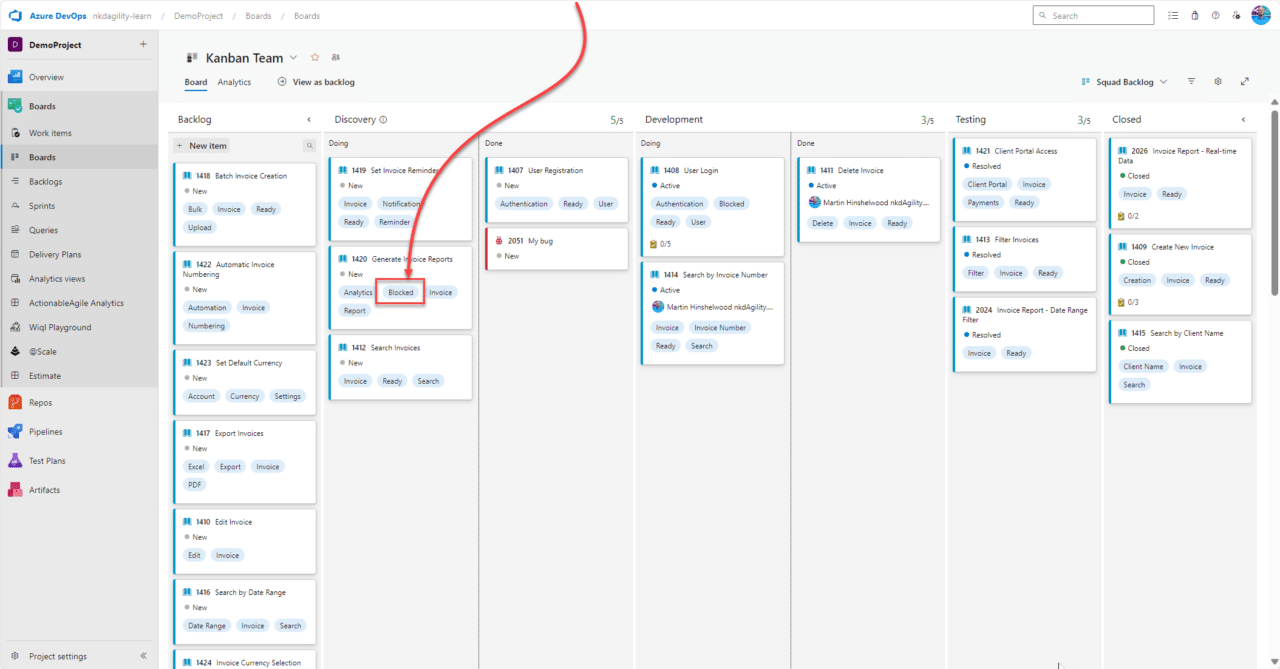
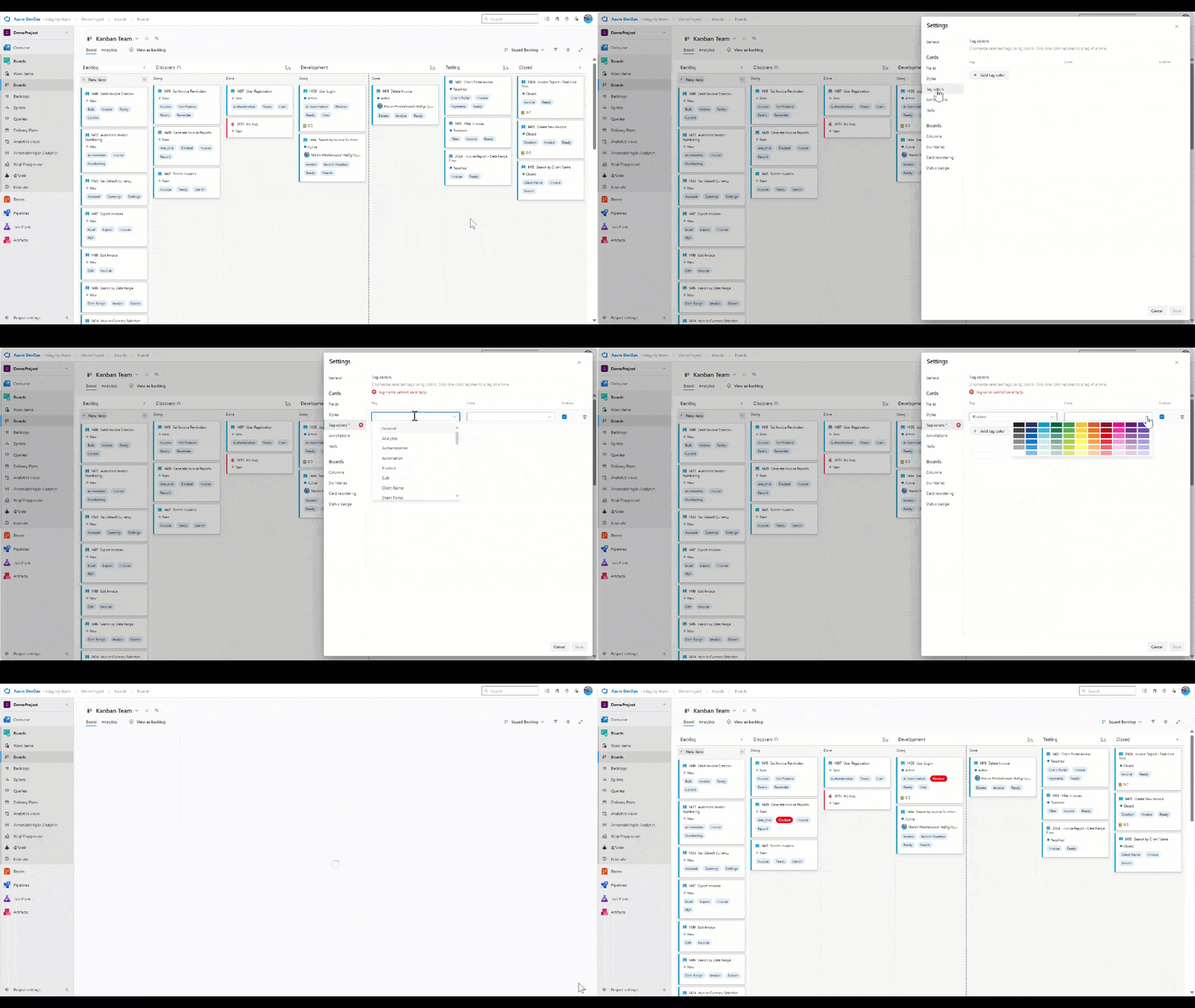
You can also increase the transparency by enabling a colour for the tag. Just be careful not to over use it, too many colours can reduce transparency and making it harder to see important information.
References:
-
Addendum-to-Kanban-Guide-implementation-options-details-2-1.pdf (kanbanguides.org) <–Page 15
-
https://prokanban.org/wp-content/uploads/2022/08/thekanbanpocketguide.pdf
-
The Principles of Product Development Flow: Second Generation Lean Product Development
Smart Classifications
Each classification [Concepts, Categories, & Tags] was assigned using AI-powered semantic analysis and scored across relevance, depth, and alignment. Final decisions? Still human. Always traceable. Hover to see how it applies.
What to read next
Why Using a Blocked Column in Azure DevOps Is a Mistake
Explains why a “Blocked” column in Azure DevOps hinders workflow, and suggests using tags and tracking to manage blocked work more …
Understanding Blocked Columns and Stalled Work in Project Boards
Explains why using blocked columns for stalled tasks on project boards harms workflow, and suggests better ways to highlight and address …
The Importance of Visualizing Your Work in a Kanban Strategy
Explains how visualising work in Kanban boosts team clarity, transparency, and alignment, and offers steps to define workflows, avoid …
Not all delays are the same
Explains the difference between waiting and blocked tasks, why clear distinction matters in workflows, and how to track and address sources …
Why Limiting Work in Progress is Key to Success in Kanban
Limiting work in progress in Kanban helps teams focus, spot bottlenecks, maintain quality, and deliver value efficiently by ensuring a …
Detecting agile theatre with real delivery signals
Why Most Companies Operating Models Fail in Dynamic Markets
A concise comparison of Predictive and Adaptive Operating Models, explaining why traditional structures fail in dynamic markets and how …
Don’t Manage Dependencies, Remove Them
Explains why dependencies are a sign of poor system design and outlines steps to eliminate them by aligning teams, clarifying ownership, and …
The Estimation Trap: How Tracking Accuracy Undermines Trust, Flow, and Value in Software Delivery
Tracking estimation accuracy in software delivery leads to mistrust, fear, and distorted behaviours. Focus on customer value, flow, and …
Flow of Value vs Flow of Work – Misnomer or Useful Shorthand?
Compares “flow of value” and “flow of work” in Kanban, explaining why only validated outcomes count as value and stressing the need for …
Why Outsourcing DevOps Fails, and How Real Engineering Excellence Starts With Your Team
Avoid DevOps vendor lock-in, discover how true engineering excellence starts with partnership, not outsourcing. Ready to transform your …
Flow of Value vs Flow of Work – Misnomer or Useful Shorthand?
Compares “flow of value” and “flow of work” in Kanban, explaining why only validated outcomes count as value and stressing the need for …
Estimating Better in an Overloaded System Is a Poor Man’s Strategy
High work in progress (WIP) causes delays and unpredictability; improving estimates won’t help. Limiting WIP and focusing on flow is key to …
The Open Guide to Kanban: Unlocking Collaborative Flow and Real-World Value for Every Team
Unlock better flow and real value with the Open Guide to Kanban, a practical, community-driven resource for teams in any industry. Join the …
Why Measuring Individual Cycle Time Fails to Help Teams
Measuring individual cycle time overlooks team performance and system bottlenecks. Focus on lead time, throughput, and process efficiency to …
Why Tracking Individual Cycle Time Distorts Team Behaviour
Tracking individual cycle time can harm team performance by encouraging task cherry-picking, reduced collaboration, and lower quality, …
Detecting agile theatre with real delivery signals
Don’t Manage Dependencies, Remove Them
Explains why dependencies are a sign of poor system design and outlines steps to eliminate them by aligning teams, clarifying ownership, and …
The Estimation Trap: How Tracking Accuracy Undermines Trust, Flow, and Value in Software Delivery
Tracking estimation accuracy in software delivery leads to mistrust, fear, and distorted behaviours. Focus on customer value, flow, and …
Flow of Value vs Flow of Work – Misnomer or Useful Shorthand?
Compares “flow of value” and “flow of work” in Kanban, explaining why only validated outcomes count as value and stressing the need for …
Why Outsourcing DevOps Fails, and How Real Engineering Excellence Starts With Your Team
Avoid DevOps vendor lock-in, discover how true engineering excellence starts with partnership, not outsourcing. Ready to transform your …
Estimating Better in an Overloaded System Is a Poor Man’s Strategy
High work in progress (WIP) causes delays and unpredictability; improving estimates won’t help. Limiting WIP and focusing on flow is key to …